A flower that never opened
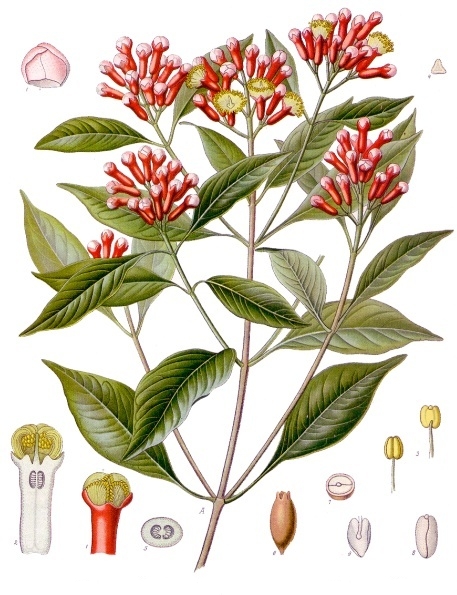
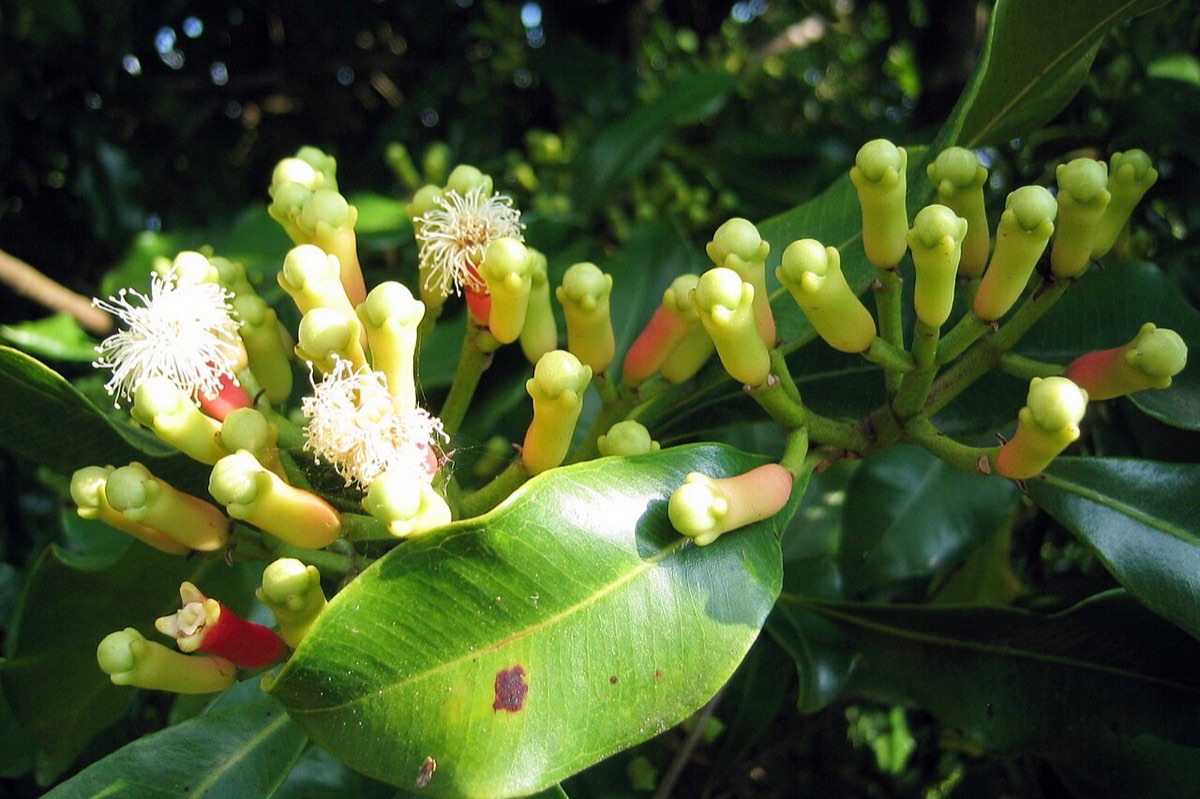
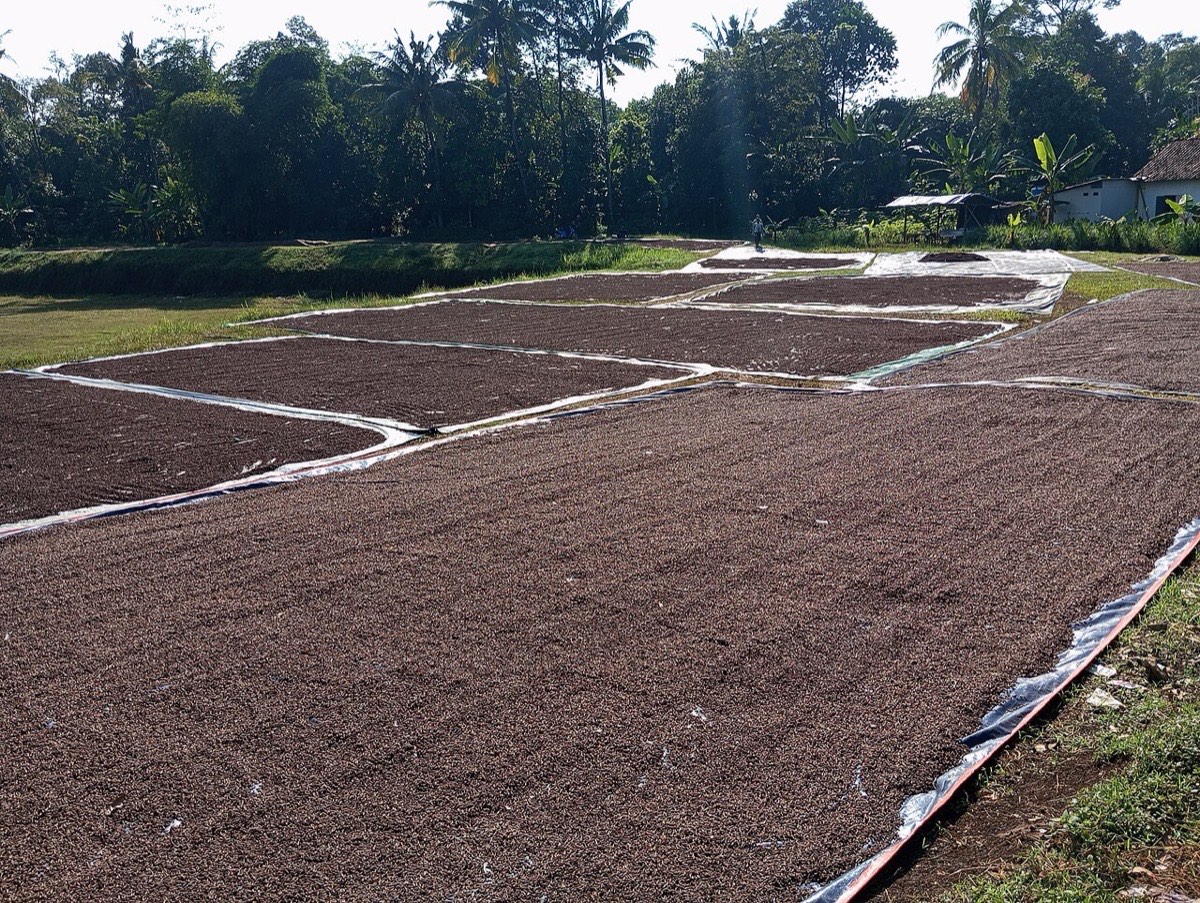
The clove tree is an evergreen, usually 7 to 12 metres tall in plantations. Pickers climb it and strip whole flower clusters by hand while the buds are full-grown but still closed, green or just turning red. The buds are rubbed off the stems and dried in the sun as fast as possible (three to five days, in one report from North Sulawesi), until they are hard and dark brown. Drying leaves about a third of the fresh weight.
The nail-like shape gave the spice its name in several languages: nagel in Dutch, clavo in Spanish, cravo in Portuguese. A tree begins to bear after several years, between four and eight depending on the source and the growing conditions, and can keep producing for as long as 50 to 60 years. In Indonesia almost all cloves, about 99 percent, come from smallholder farms.
How it tastes
Cloves are warm, strong and aromatic, and one US extension guide groups them with the "sweet" spices such as cinnamon and allspice. The flavour is concentrated in the oil, and its main constituent is eugenol, often cited at up to about 90 percent of clove oil (one review gives a range of 45 to 90 percent); the buds themselves can hold up to 18 percent oil. Eugenol also numbs. Clove oil for toothache was first documented in France in 1640, and the word eugenol comes from an old botanical name for the tree, Eugenia caryophyllata.
Where it grows
Kew's World Checklist lists Maluku as the clove's only native area. When Portuguese ships arrived in 1512, cultivated cloves came from just five small islands off the west coast of Halmahera: Ternate, Tidore, Moti, Makian and Bacan. Moluccan tradition says cultivation began on Makian. One history of the Spice Islands describes wild clove trees, with larger and less fragrant buds, as common in the lower montane forests of many islands in Maluku and New Guinea, though Kew's checklist does not include New Guinea.
Indonesia is still the world's largest producer. In 2024 it grew about 148,000 tonnes, roughly three-quarters of the world's cloves, far ahead of Madagascar and Tanzania. Most now comes from outside the old clove islands: the biggest producers are the province of Maluku, South, Central and Southeast Sulawesi, and East Java, while North Maluku, home of the original clove islands, is among the ten main producing provinces but supplies only about 3 percent of the national harvest (2019–2023 average).
The war over cloves
Cloves were traded to China and the Mediterranean in antiquity. At Terqa, on the Euphrates in Syria, excavators reported what they identified as cloves in a jar in the pantry of a house from about 1700 BCE, which they called the earliest evidence of the spice in the west.
Early-16th-century Portuguese estimates put the yearly harvest at 600 to 1,200 tonnes. The Dutch East India Company (VOC) wanted to control all of it. From 1647 it began destroying clove and nutmeg trees, and restricted clove growing to Ambon and the nearby islands of Haruku, Saparua and Nusalaut. By 1650, Pamela Swadling writes, Company policy had turned the once-prosperous Moluccas into "an economic wilderness", and the Company was spending more on forts and enforcement than it made in profit. A 1652 treaty gave the Company the right to destroy as many clove trees as it saw fit; contracts banned clove growing in the territories of Ternate and Bacan in 1653, and it was prohibited in Tidore in 1657. Soldiers and labourers were sent to uproot and burn trees outside Company control. Raids of this kind, carried by Company fleets of local kora-kora war canoes, were called hongitochten, or hongi expeditions.
Local tradition holds that some trees survived. On the slopes of Mount Gamalama on Ternate, at about 500 to 650 metres, stand the Afo trees, said to be the oldest clove trees in the world. According to North Maluku's plantation office, the first of them, Afo I, was 36.6 metres tall and nearly two metres across. It died around the end of the twentieth century. A third-generation tree, about 200 years old, was still alive and protected in 2021.
"The story that was passed through generations here was that these trees survived the Dutch force's deforestation and clove planting ban in the 17th century. My great grandfather and other locals kept the trees' locations a secret from the Dutch army." Hamadal Minggo, clove seed grower, Marikurubu, Ternate, to Kompas (English edition), 2017
The monopoly broke in the 1770s. Pierre Poivre, the French intendant of Mauritius, sent secret expeditions to the Moluccas; one that sailed in May 1769 came back with clove plants, and clove plantations were set up on Mauritius and Réunion. In the early nineteenth century, Arab planters under Omani rule started plantations on Zanzibar and Pemba with seed from Mauritius, worked by enslaved people.
Kretek
A large share of Indonesia's cloves is smoked, not eaten. Kretek are cigarettes of tobacco mixed with chopped clove buds and other flavourings, and in Indonesia kretek smokers outnumber smokers of "white" cigarettes. The kretek industry is thought to absorb most of the clove harvest: the agriculture ministry's 2025 outlook says the kretek industry takes almost three-quarters of national production, though the 2023 outlook it draws on gives that share for all domestic use. Kretek are often wrongly seen as less hazardous than ordinary cigarettes, but a 2012 review found their health burden is similar. Eugenol in the smoke may numb the airways and make it feel less harsh.
In the Indonesian kitchen
Indonesian cooks mostly use cloves whole, in long-cooked savoury dishes and in hot drinks, where there's time to draw the flavour out. Recipes in Indonesian food media call for them in:
- Semur, the Betawi sweet-soy beef stew, with nutmeg and cinnamon.
- Sop buntut, oxtail soup, with nutmeg. In Kendal, Central Java, a 2011 Kompas report found a restaurant serving sop buntut bumbu cengkeh (clove oxtail soup) as a Kendal speciality.
- Gulai kambing, goat curry, with cinnamon and cardamom.
- Soto Banjar, the clear chicken soup of South Kalimantan, with cinnamon, cardamom and nutmeg.
- Rendang, toasted and ground into the dry spice mix of a Padang-style recipe.
- Wedang uwuh, a hot drink from Bantul, Yogyakarta, steeps ginger, clove buds or stems, dried clove leaves, sappan wood and rock sugar.
Swaps
Buying and storing
Buy whole cloves. Keep them in an airtight jar, somewhere dry and away from heat and light, and not on the counter by the stove. Whole cloves keep their flavour longer than ground. US extension services give anywhere from one to four years for whole spices and from six months to three years for ground ones, so trust your nose. To test them, crush one or two and sniff. The smell should be fresh and pungent.
Still debated
- How old was Afo? North Maluku's plantation office, as reported by Republika, put Afo I at 416 years when it died in the 1990s; Mongabay says about 416 years, dying around 2000; Kompas said "more than 300 years old" and dead in 1989. None of the reports says how the age was worked out.
- Which island grew cloves first? The botanical record only says Maluku. Moluccan tradition points to Makian; Ternate treats the Afo trees as its own. Our label names Ternate and Tidore as the historic heartland, not as the single place of origin.
- How much goes into kretek? The agriculture ministry's 2025 outlook says the kretek industry absorbs almost 75 percent of national production. But the 2023 outlook it cites gives almost 75 percent as the share used at home, mostly by industry including cigarette makers, and elsewhere says 91.32 percent goes "for consumption and the kretek industry". Neither gives a measured figure for kretek alone.
- The Terqa cloves. The identification and the date come from the excavation team, whose full botanical analysis was published only in 2020. In 1998 the archaeologist Matthew Spriggs wrote that other Near Eastern specialists and palaeobotanists apparently did not accept the identification and took the find for an unrelated species, citing a personal communication; Pamela Swadling's history repeats the doubt.
Sources
- IPNI, Syzygium aromaticum (L.) Merr. & L.M.Perry. ipni.org
- Royal Botanic Gardens, Kew, World Checklist of Vascular Plants, via GBIF. gbif.org
- Cortés-Rojas, D. F., de Souza, C. R. F. & Oliveira, W. P. (2014). Clove (Syzygium aromaticum): a precious spice. Asian Pacific Journal of Tropical Biomedicine 4(2): 90–96. PMC
- Kamatou, G. P., Vermaak, I. & Viljoen, A. M. (2012). Eugenol: from the remote Maluku Islands to the international market place. Molecules 17(6): 6953–6981. PMC
- Swadling, P. (1996; digital ed. 2019). Plumes from Paradise, ch. 2, "The rise and decline of the Spice Islands". Sydney University Press. open access
- Harris, S. Plant 314: Syzygium aromaticum. Plants 400, University of Oxford. herbaria.plants.ox.ac.uk
- Yoo, G. Cloves: the spice that enriched empires. JSTOR Daily. daily.jstor.org
- Brixius, D. (2018). A hard nut to crack. British Journal for the History of Science 51(4): 585–606. doi
- Flora Malesiana, Cyclopaedia of Collectors: Provost, Simon. Naturalis
- FAOSTAT, Crops and livestock products: cloves, production 2024. fao.org
- Kementerian Pertanian, Pusdatin (2025). Outlook Komoditas Perkebunan Cengkeh 2025. satudata.pertanian.go.id
- Kementerian Pertanian, Pusdatin (2023). Outlook Cengkeh 2023. PDF
- Ichi, M. (2021, 6 June). Mengunjungi Tongole, kampung bambu dengan situs cengkih tertua. Mongabay Indonesia. mongabay.co.id
- Aminah, A. N. (2013, 31 August). Cengkeh tertua di dunia ada di Ternate. Republika. republika.co.id
- Ponco A, A. & Kurniawan, M. (2017, 2 August). "Treasure" hidden in the foothills of Gamalama. Kompas (English). kompas.id
- CNN Indonesia (2021, 30 August). Menanti tunas muda si Afo tua. cnnindonesia.com
- O'Connor, R. J. (2012). Non-cigarette tobacco products. Tobacco Control 21(2): 181–190. PMC
- Kompas.com recipes and features naming clove: semur (3 June 2026), sop buntut (27 September 2022; Kendal, 18 June 2011), gulai kambing (24 April 2023), soto Banjar (15 August 2022), rendang (20 April 2023), wedang uwuh (25 March 2020; 11 December 2024). kompas.com
- Ohio State University Extension, Pantry food storage (HYG-5401); K-State Research and Extension, How old are your spices? (2017); University of Delaware Cooperative Extension, Using herbs and spices. ohioline.osu.edu
- The Spice House, Substitute for cloves (retailer guidance). thespicehouse.com
- IIMAS, Terqa excavation team (n.d.). Terqa: a narrative, "The House of Puzurum". terqa.org; Buccellati, F. (ed.) (2020). Terqa Final Reports 3. Undena.
- Spriggs, M. (1998). Research questions in Maluku archaeology. Cakalele 9(2): 51–64. scholarspace.manoa.hawaii.edu
- Mostert, T. (2023). Spice War: Ternate, Makassar, the Dutch East India Company and the struggle for the Ambon Islands (c. 1600–1656). PhD thesis, Leiden University. Leiden