One fruit, two spices
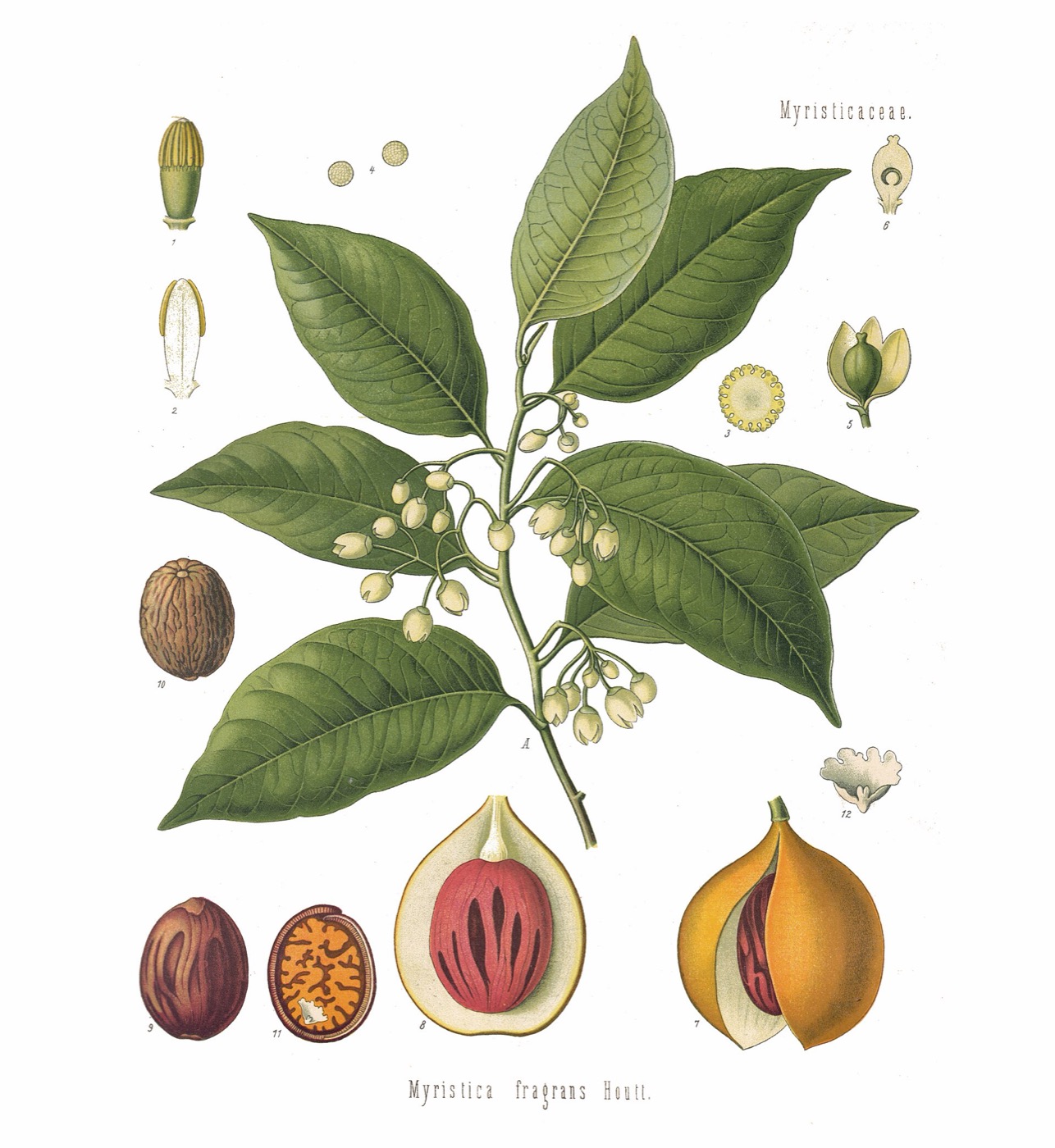
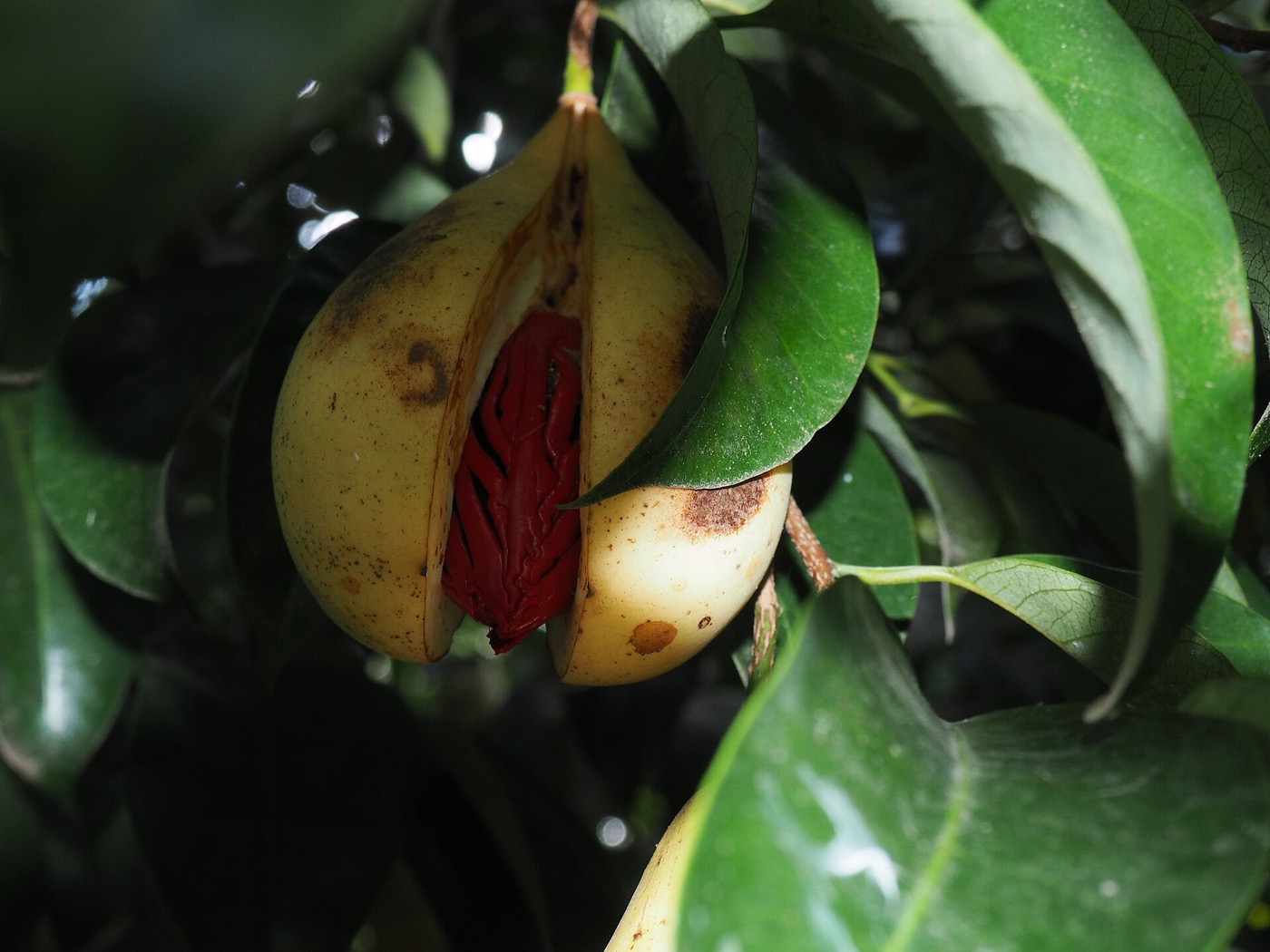
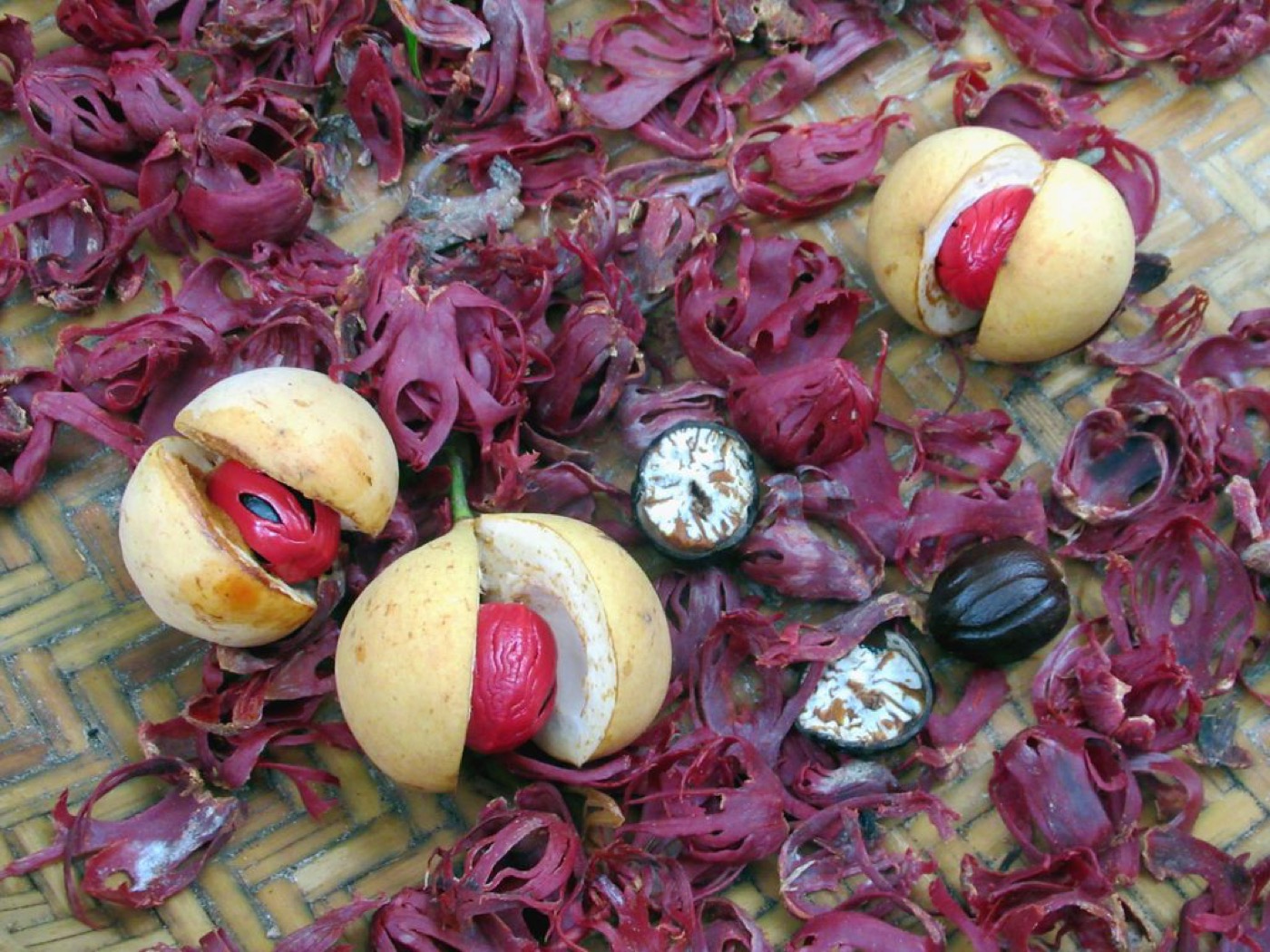
The nutmeg fruit looks a little like an apricot. When it ripens it splits along a seam and shows the seed inside, wrapped in a bright red net called the aril. Harvesters peel the aril away and flatten it to dry; as it dries and cures it fades from red to orange or pale yellow and becomes mace.
The seed dries in its shell until the kernel rattles inside: about a week in the sun, or six to eight weeks on shaded drying floors. Crack the shell, and the kernel is the nutmeg.
How it tastes
Nutmeg is warm and sweet with a resinous, slightly piney edge. Mace tastes similar and is often described as more delicate, though in one side-by-side kitchen test it was the stronger of the two. Ground nutmeg loses its aroma much sooner than whole, which is why many cooks grate it straight into the pot.
Where it grows
Nutmeg is native to the Banda Islands, a cluster of small volcanic islands in the Banda Sea, part of today's Maluku province. For centuries these islands were the world's only source of nutmeg and mace, and that made Banda the focus of a long and violent fight over the trade.
In 1667 the Treaty of Breda let the Dutch keep Run, the westernmost Banda island, while the English kept New Amsterdam, which became New York. Today nutmeg is also grown in North Sulawesi, North Maluku and Aceh, as well as in Grenada and India.
In the Indonesian kitchen
Indonesian cooks use nutmeg in savoury dishes, and the fruit around it in sweets.
- Semur, the sweet soy-sauce stews of Java and Jakarta, often take nutmeg alongside clove.
- Sop buntut, oxtail soup, is commonly seasoned with nutmeg, clove and pepper.
- In Maluku, ikan kuah pala is a fish soup scented with nutmeg.
- The fruit flesh can be candied, wet in syrup or dried with sugar, as manisan pala, a snack sold in Bogor and on Banda Neira. In much of Maluku, though, most of the flesh is still thrown away.
Swaps
Buying and storing
Buy whole nutmegs. They keep for years in an airtight jar away from heat and light, while ground nutmeg fades much sooner. A good nutmeg feels heavy for its size. Mace is sold as whole blades or ground; the blades keep longer.
Sources
- Giles Milton, Nathaniel's Nutmeg (London: Hodder & Stoughton, 1999).
- Vincent C. Loth, "Armed Incidents and Unpaid Bills: Anglo-Dutch Rivalry in the Banda Islands in the Seventeenth Century", Modern Asian Studies 29, no. 4 (1995).
- Kamus Besar Bahasa Indonesia, entries pala and fuli.